
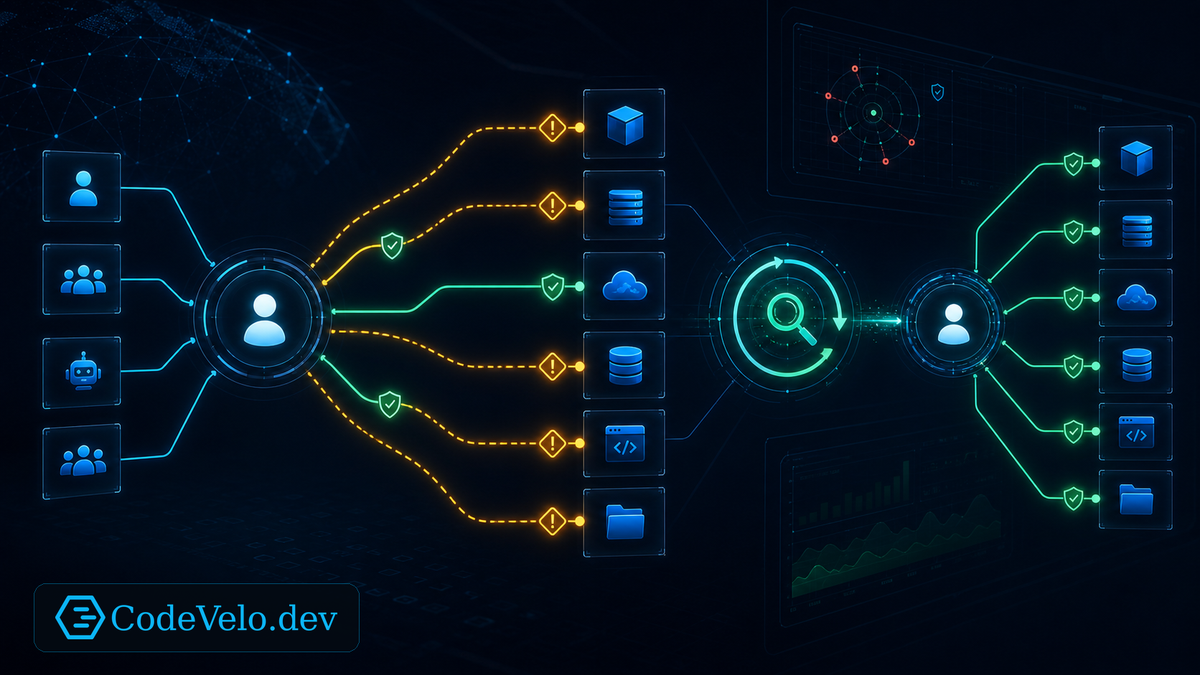
Access usually expands through reasonable individual decisions.
A developer helps with an incident. A support engineer receives temporary impersonation rights. A service account gains another scope. A team reorganizes but keeps its old roles. Each grant solves an immediate problem, while removal waits for a future review.
That accumulation is authorization drift.
Tie Grants To Purpose
Record why access exists, who approved it, which resources it covers, and when it should be reviewed or removed.
Separate standing job access from temporary elevation. Use time-bound grants for incidents, migrations, audits, and support cases. Avoid broad roles created only because narrow permissions were inconvenient to model.
Purpose provides the test for whether a grant is still valid.
Review Relationships
Authorization often depends on changing relationships.
Employment, team membership, project assignment, customer support cases, vendor contracts, device posture, and environment ownership can all end. Connect access removal to those lifecycle events instead of relying only on annual certification.
Departures are not the only reason permissions become stale.
Find Effective Access
Review what identities can actually do, not only their direct role names.
Include nested groups, inherited permissions, API tokens, service accounts, delegated administration, resource policies, emergency access, and application-level roles. Identify combinations that create authority no single grant appears to provide.
Effective access is the real attack surface.
Make Removal Safe
Permission cleanup needs testing and rollback.
Observe recent use, identify critical automation, remove access in controlled groups, and monitor failures. Do not preserve broad privileges forever because one unknown workload might depend on them. Fix the ownership and dependency record instead.
Run The Defense Test
Identify why each authority is trusted. Define lifecycle triggers for grant and removal. Use narrow permissions to limit impact. Preserve evidence of access changes and privileged use. Maintain a controlled recovery process for mistaken removal.
Least privilege is not a one-time design. It is continuous maintenance.