
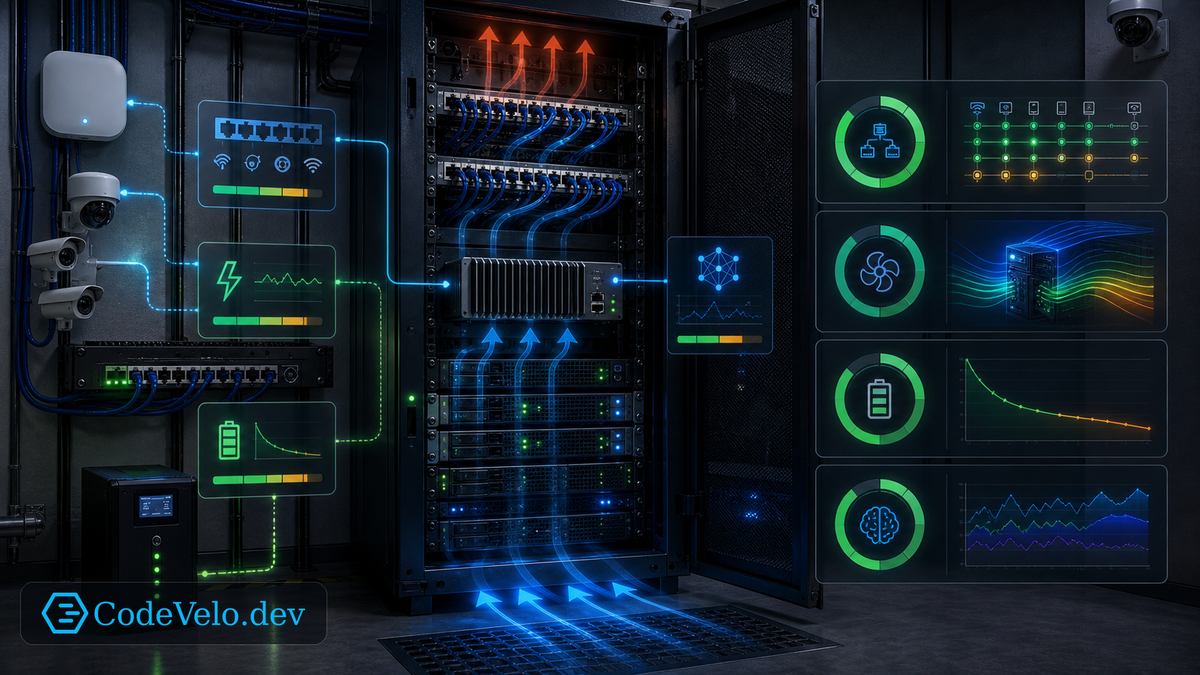
Small infrastructure environments fail capacity planning in quiet ways.
There is room in the rack, but no safe power budget. There are switch ports available, but no PoE headroom. The closet can accept another appliance, but cannot remove the heat. The edge gateway has CPU available, but the UPS runtime no longer meets the recovery target.
Capacity is not one number.
Plan Across Dependencies
Every new device consumes more than a port.
It may require:
- PoE budget.
- Switch backplane capacity.
- UPS runtime.
- Cooling margin.
- Rack airflow.
- IP space.
- Monitoring coverage.
- Maintenance access.
If any of those are exhausted, the install is not really ready.
PoE Needs Real Math
PoE growth is easy to underestimate.
Access points, cameras, phones, sensors, door controllers, displays, and small edge devices can all draw from the same switch budget. Peak draw, startup behavior, and future expansion matter more than the average load shown on a quiet day.
Capacity plans should include safe headroom, not just current consumption.
Cooling Follows Power
Power consumed by equipment becomes heat in the room.
Adding edge compute to a wiring closet can change thermal behavior quickly, especially if the space was designed for patch panels and access switches. Watch temperature by zone, not just at the thermostat.
The rack may be organized, but the air may disagree.
Forecast The Stack
Capacity planning should be reviewed alongside product and security plans.
New cameras, Wi-Fi upgrades, AI gateways, backup appliances, and redundant network paths all affect the same physical envelope. The earlier those plans meet, the fewer emergency upgrades happen later.
The best capacity plan prevents the sentence, "We can fit it, but we cannot run it."