
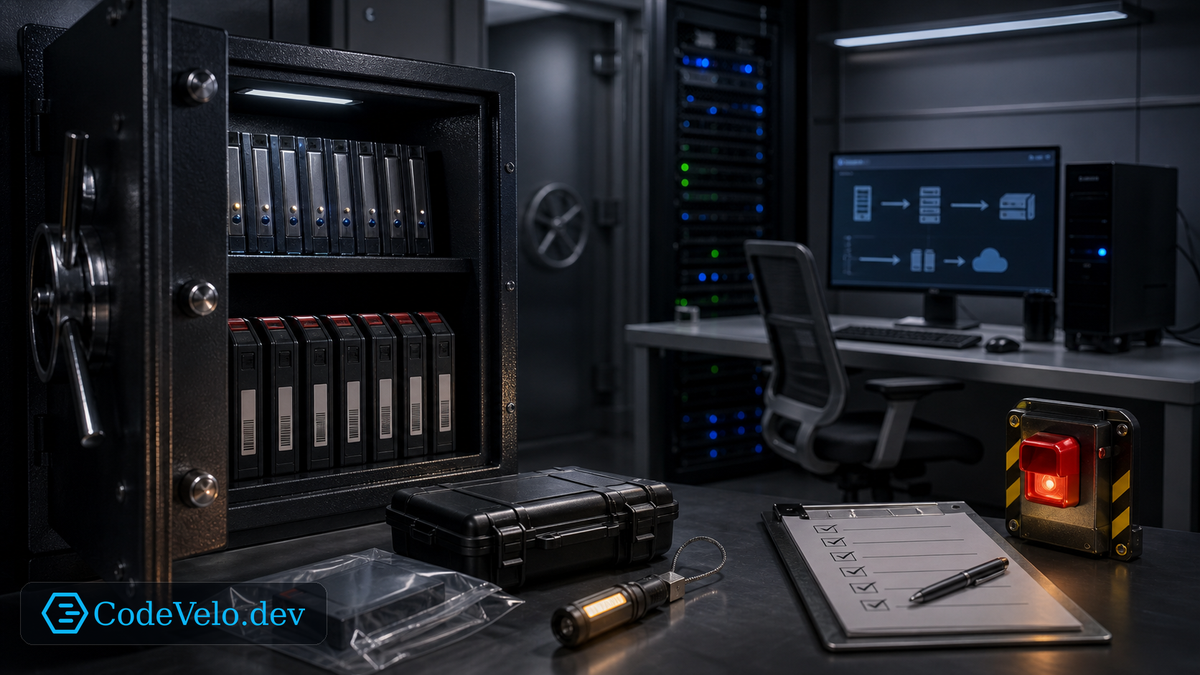
A 3-2-1-1 backup strategy sounds strong: three copies, two media types, one offsite copy, and one immutable or offline copy.
But the last copy is only valuable if the team can use it during a real wipe.
Cold storage recovery needs a break-glass protocol: a documented, tested, access-controlled process for restoring from the most protected backup when normal systems cannot be trusted.
Assume The Normal Path Is Gone
The reason cold storage exists is that the normal path may fail.
Credentials may be compromised. Admin consoles may be unavailable. DNS may be poisoned. Backup indexes may be damaged. Documentation may be trapped inside the same systems that were wiped.
A break-glass plan has to survive those conditions.
That means keeping critical recovery instructions outside the primary environment, with controlled access and clear ownership.
Define The Recovery Chain
A useful protocol answers practical questions:
- Who can authorize cold recovery?
- Where are the offline credentials stored?
- Which systems are restored first?
- How is backup integrity verified?
- How are clean networks and devices established?
- What evidence must be captured before restoration?
The order matters. Restoring an infected image into a clean environment creates a second incident. Restoring business apps before identity and network controls may delay access.
Practice Without Drama
The first cold recovery test should not happen during a crisis.
Run tabletop exercises. Restore representative data into an isolated environment. Time the process. Identify missing secrets, undocumented dependencies, and unclear authority. Update the protocol after every test.
The plan should be boring enough that people can execute it while tired.
Immutable Does Not Mean Instant
Cold and immutable backups trade speed for trust. Retrieval may take time. Access may require multiple approvals. Validation may be slower than a normal restore.
That is acceptable if the business understands the recovery objectives.
Define RTO and RPO for the break-glass path separately from the everyday backup path. The cold copy is the survival layer, not the convenience layer.
The real goal is not having backups. The real goal is being able to rebuild from known-good data when everything else is suspect.