
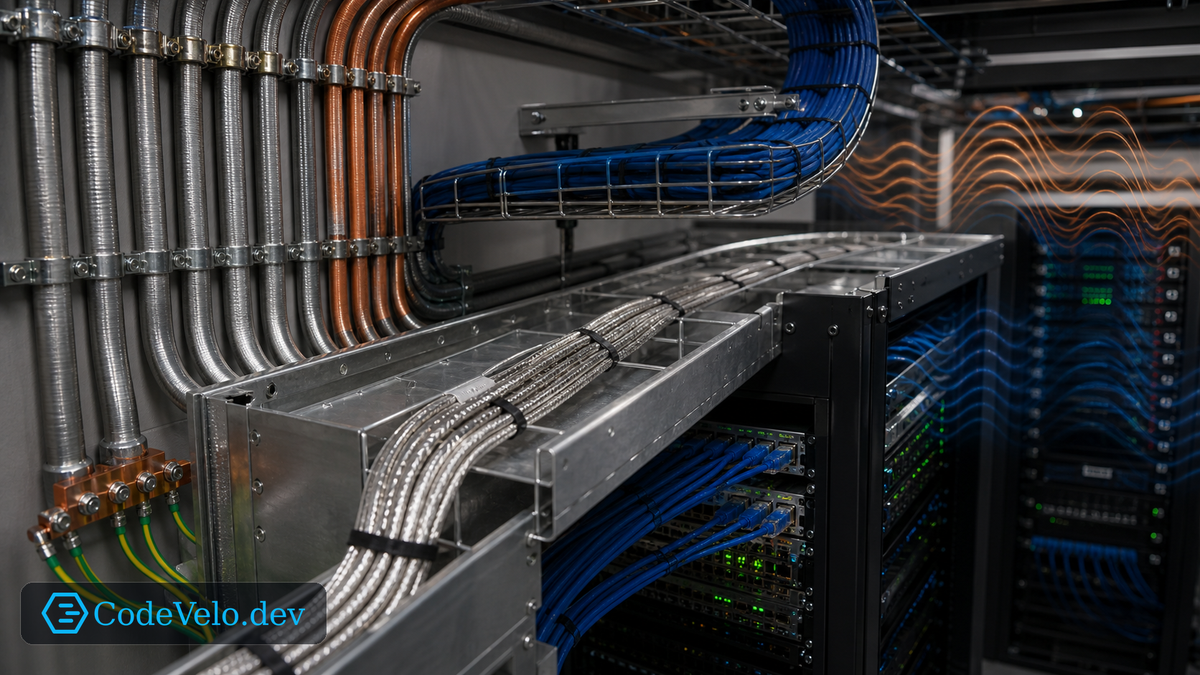
At low speeds, messy cabling often looks like a cosmetic problem. At 10Gbps and beyond, it can become a signal integrity problem.
High-density physical-to-digital conduits concentrate power, data, lighting, HVAC controls, security systems, and building automation into crowded spaces. That density increases the chance that electromagnetic interference, poor separation, bad grounding, or tight bends will reduce reliability.
The result may not be a total failure. It may be retries, negotiated speed drops, intermittent packet loss, or unexplained instability under load.
Shielding Is A System
Shielded cable is not useful by itself if the rest of the installation ignores the rules.
The cable, connectors, patch panels, racks, and grounding path all participate. A shield that is poorly terminated can become inconsistent. A shield that is grounded incorrectly can create new problems. A high-quality cable routed beside noisy power for too long can still suffer.
Signal integrity is physical discipline.
Separation Still Matters
Good installs preserve distance from known interference sources:
- High-voltage electrical runs.
- Motors, compressors, and elevator systems.
- Fluorescent or industrial lighting ballasts.
- Dense bundles of power cabling.
- Wireless and security equipment with strong emitters.
Where paths must cross, crossing at right angles is better than running parallel. Where separation is impossible, shielding and conduit choices become more important.
Density Changes The Math
A single 10Gbps run may behave well. A tray full of them, packed tightly beside power and building controls, is a different environment.
Bundle size, airflow, heat, bend radius, and patching discipline all affect long-term reliability. High-density racks also make future troubleshooting harder, which means labels and documentation are part of the shielding strategy.
If the team cannot identify a path quickly, the repair window gets longer.
Test Like The Link Matters
Validation should include more than link lights.
Use certification testing, review negotiated speeds, monitor error counters, and watch for interface flaps under real load. A cable can appear fine during a quiet afternoon and fail during peak throughput.
The best time to find a marginal physical path is before application performance depends on it.
10Gbps cabling is infrastructure, not decoration. Treat the electromagnetic environment as part of the network design.