
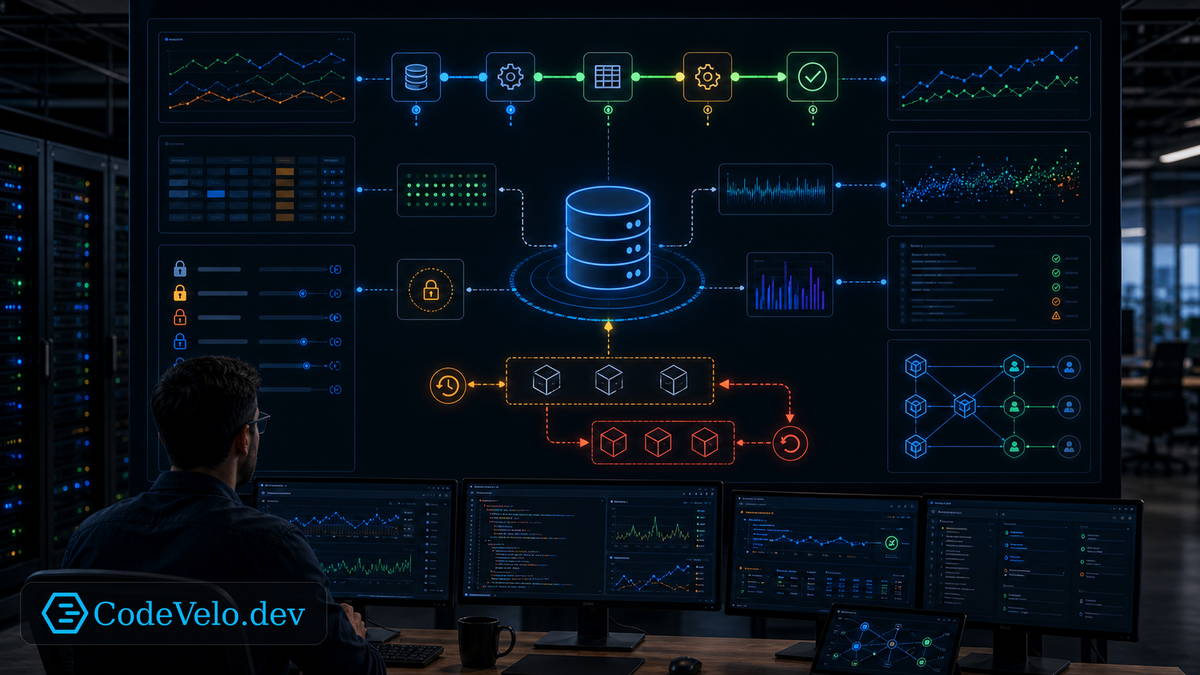
Application deployments get dashboards. Database changes often get hope.
That imbalance is risky.
Schema migrations, index builds, backfills, query changes, and data corrections can affect performance, availability, and rollback options. They deserve the same operational visibility as service deploys.
Observe The Migration Itself
A migration should report progress, duration, locks, retries, affected rows, and failure state.
If a change runs longer than expected, the team should know whether it is safe to wait, pause, roll forward, or stop. Silent migrations create pressure because nobody can tell whether the system is healthy or stuck.
The migration is production code.
Watch The Queries Afterward
Database changes often fail indirectly.
A new index may not be used. A query plan may shift. A field shape may change assumptions in application code. A backfill may increase storage or replication pressure. Observability should compare before and after behavior.
Useful signals include query latency, lock wait, connection pool pressure, replication lag, error rate, and slow query volume.
Treat Backfills As Workloads
Backfills consume capacity.
They need rate limits, pause/resume behavior, progress tracking, and safety checks. They should avoid competing with user traffic during peak windows unless the business accepts the risk.
A backfill without controls is a load test in disguise.
Make Rollback Honest
Some database changes cannot be rolled back cleanly.
That should be visible before release. Use expand-and-contract patterns, backward-compatible migrations, backups, and feature flags where possible. When rollback is manual or impossible, the deployment gate should reflect the risk.
Database change observability turns hidden risk into managed risk.