
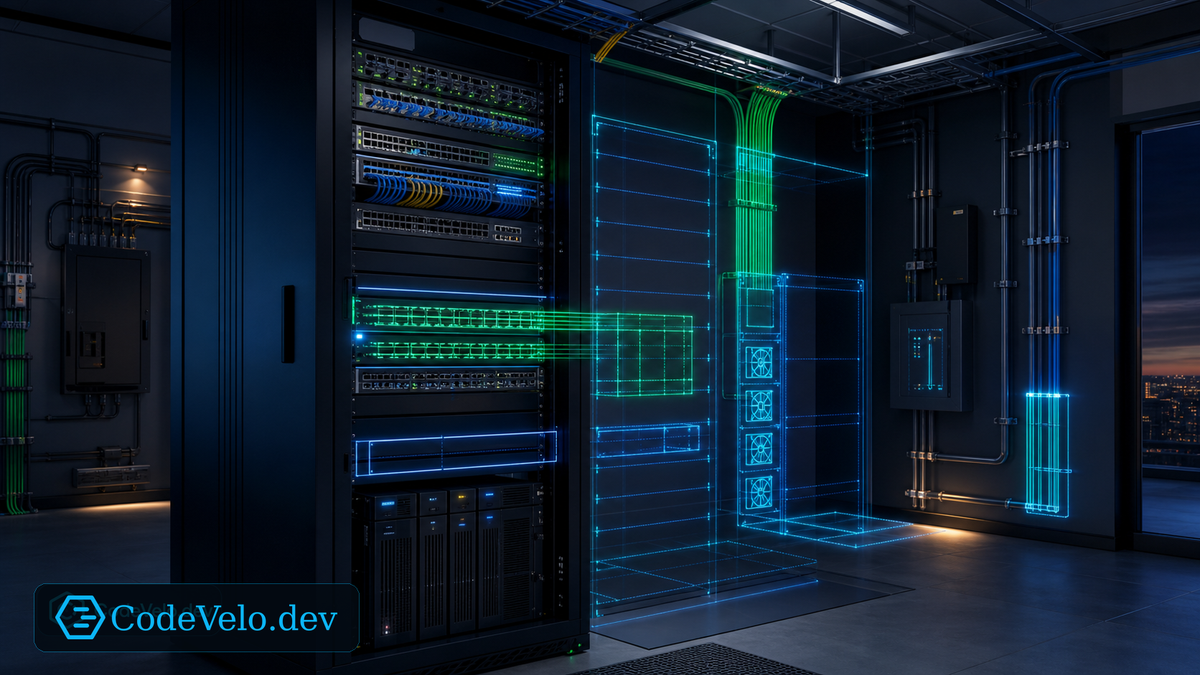
A network closet can look complete on installation day and become unserviceable three years later.
The difference is rarely the rack itself. It is whether the design preserved options. New access points increase PoE demand. Faster uplinks change fiber requirements. Cameras, sensors, edge compute, and redundant power consume space that was never reserved.
A ten-year closet is designed for change, not just today's device count.
Reserve More Than Rack Units
Empty rack units are useful, but they are only one kind of headroom.
Reserve switch ports, PoE capacity, UPS load, circuit capacity, cooling, patch-panel positions, conduit space, fiber strands, and cable-management volume. Track each resource independently. A rack with open space can still be full because its power or pathways are exhausted.
Make expansion zones obvious so future work does not consume service loops or block airflow.
Build Diverse Paths Early
Pathway work is disruptive after walls and ceilings are finished.
Install pull strings, spare conduit, appropriately sized sleeves, and documented routes while access is easy. Separate redundant uplinks where the building allows it. Preserve bend radius and service access at every transition.
The cheapest future cable is the one the building was prepared to receive.
Keep Equipment Serviceable
Dense does not always mean efficient.
Leave clearance for doors, side panels, power supplies, patching, and safe ladder work. Place heavy equipment low. Keep copper and fiber organized without creating bundles that trap heat or hide labels. Design the rack so one device can be replaced without disturbing five others.
Maintainability is a physical property.
Document The Design Envelope
The closet record should show more than installed equipment.
Document maximum planned heat load, available electrical capacity, UPS runtime targets, grounding, pathway limits, port reserves, fiber allocation, and rack elevation. Record which assumptions would trigger an expansion or redesign.
Future teams need to know not only what exists, but how much change the room can safely absorb.
Run The Age-Well Test
Assign an owner. Measure capacity and environmental condition. Define supported upgrade paths. Keep the rack elevation and cable records current. Establish retirement procedures for devices and abandoned cabling.
A durable closet is not frozen in time. It is a controlled platform for the next decade of change.