
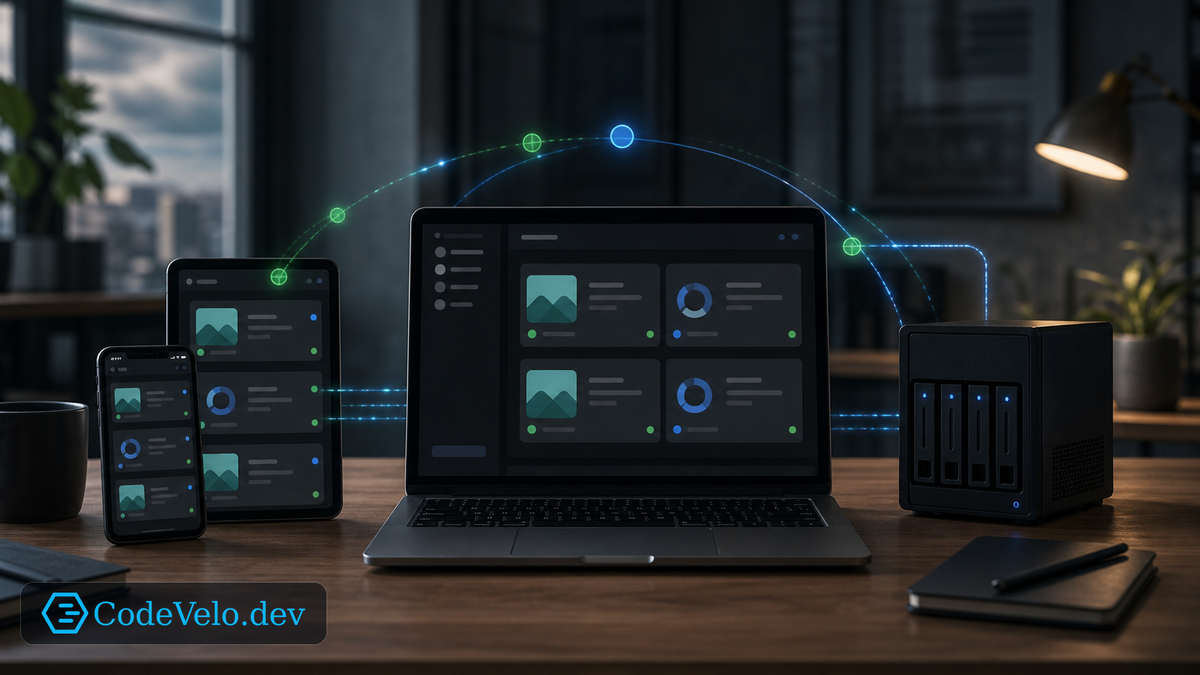
The loading spinner became normal because the web trained users to wait for the network before anything useful could happen.
Local-first architecture reverses that expectation. The app should open with usable local state, accept input immediately, and synchronize when the network is available. The user does not wait for the database. The database catches up with the user.
That shift changes how teams design frontend systems.
Local State Is Not A Cache
A cache is disposable. Local-first state is part of the product contract.
If a field is edited offline, the app must remember it. If a device loses connection, the user should still be able to read, search, and queue meaningful work. If sync fails, the system should explain what happened without discarding intent.
That means local storage needs structure:
- Durable records, not only rendered HTML.
- Mutation logs, not only final values.
- Conflict detection, not silent overwrites.
- User-visible sync state, not mystery background work.
Local-first design treats the client as a real participant in the system.
Sync Is A Product Surface
The hardest part is not storing data locally. The hard part is reconciling state across devices, users, and time.
Good sync design makes promises explicit. Some fields can merge automatically. Some need last-writer-wins behavior. Some require human choice. Some workflows should lock or warn when conflicts are likely.
The UI should expose that reality in small, calm ways: saved locally, syncing, synced, needs attention. Those states are more useful than a spinner because they describe progress and risk.
Hardware Still Matters
Local-first does not make infrastructure irrelevant. It makes infrastructure more graceful.
Fast local disks, reliable browsers, edge databases, nearby sync nodes, and resilient network paths all reduce the time between local intent and shared truth. In an office or field environment, the physical layer can decide whether sync feels instant or fragile.
This is where "offline support" becomes "latency-tolerant work."
Build For Interruption
A local-first app should assume the network will disappear, return, slow down, and disagree.
Useful patterns include:
- Optimistic writes backed by durable mutation queues.
- Idempotent server operations.
- Conflict-aware data models.
- Background sync with explicit retry behavior.
- Interfaces that keep read and write paths usable during outages.
The goal is not to eliminate distributed systems complexity. The goal is to stop dumping that complexity onto the user as a spinner.
When the app works first and synchronizes second, waiting becomes rare. That is the experience users remember.