
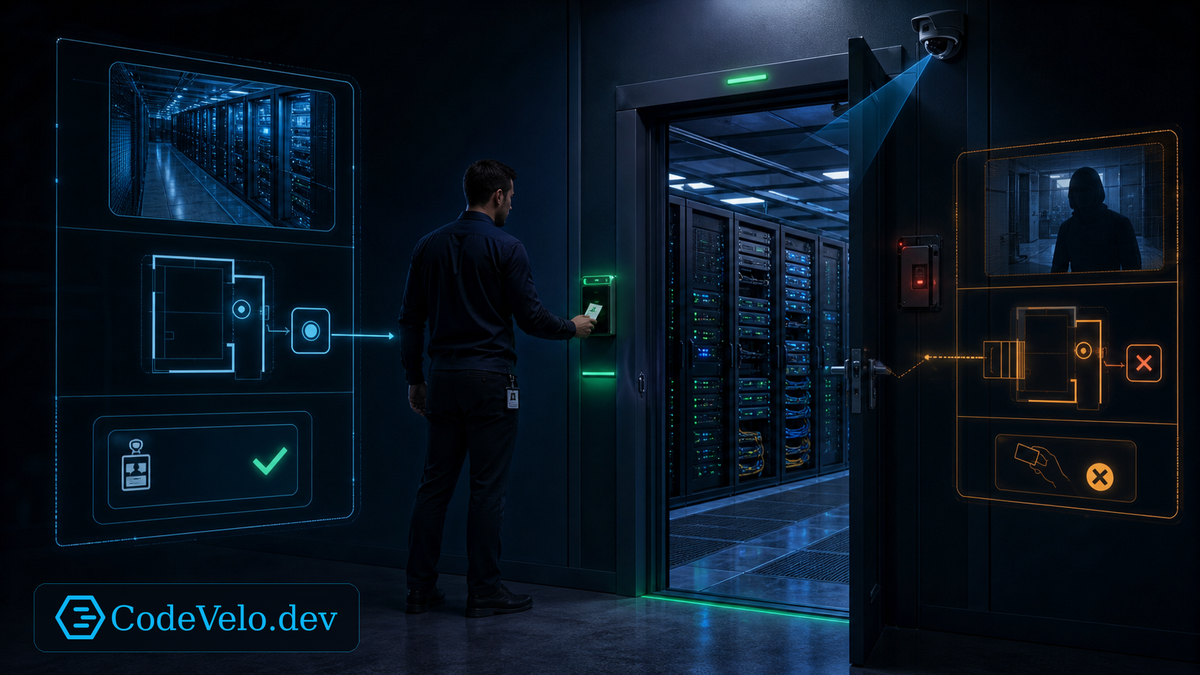
A locked door is useful, but it is not a complete physical security program.
Server rooms and network closets concentrate switching, power, storage, management interfaces, and building connectivity. Someone who reaches the room may be able to interrupt service or bypass controls that look strong from the network.
Physical access needs the same lifecycle discipline as digital access.
Define Who Needs Entry
Grant access by role and operational need, not convenience.
Separate routine staff, emergency responders, facilities teams, vendors, and temporary installers. Review access after projects, employment changes, and vendor transitions. Avoid shared badges, unmanaged keys, and door codes that cannot be attributed or revoked.
Access to one closet should not imply access to every site.
Protect More Than The Door
The room should resist accidental and deliberate interference.
Use controlled doors, enclosed racks where appropriate, protected patching, locked management consoles, documented key custody, and camera coverage aligned with privacy policy. Keep ceiling, wall, and adjacent-room pathways in scope when they provide alternate entry.
Physical controls must not block safe fire response or emergency power isolation.
Preserve Entry Evidence
Badge and door events should identify who entered, when, which access method was used, and whether the door closed correctly.
Correlate unusual access with device, network, power, and configuration changes. Define retention and access to those records. Test clocks so events can be compared during an investigation.
Alerts should focus on meaningful conditions such as forced entry, held doors, or access outside approved windows.
Prepare Emergency Access
Responders need a controlled path when normal systems fail.
Document mechanical overrides, emergency contacts, out-of-hours approval, and post-event review. Protect override keys and credentials, test them periodically, and record every use.
Run The Defense Test
Identify who is trusted with physical entry. Define how access starts and ends. Use room and rack boundaries to limit impact. Preserve attributable entry evidence. Maintain an emergency path that restores access without making the exception permanent.
The physical layer is part of the security architecture. Treat it accordingly.