
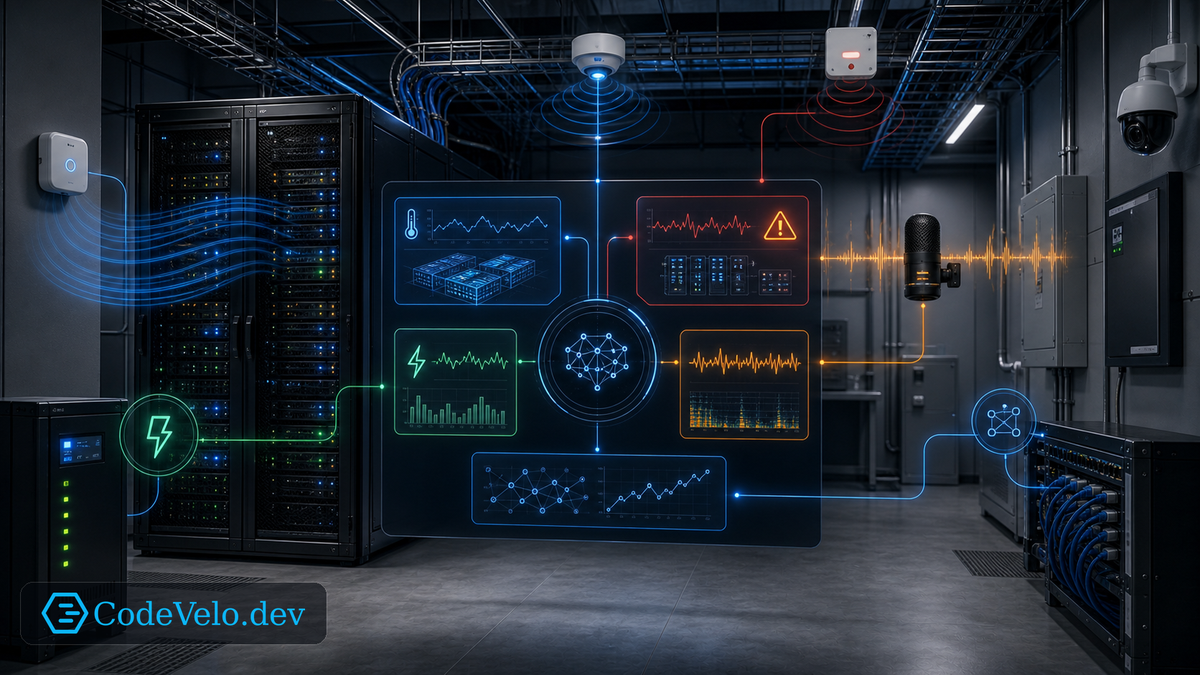
The first wave of infrastructure monitoring asked simple questions. Is the device up? Is the room hot? Is the UPS on battery? Is the switch reporting errors?
Those signals still matter, but they are incomplete alone.
Sensor fusion is the practice of combining physical and digital telemetry so the room can explain itself. Temperature, humidity, airflow, power draw, acoustic patterns, door events, camera status, network counters, and device logs become more useful when they are interpreted together.
One Signal Is Rarely Enough
A rack temperature alert may indicate cooling failure, blocked airflow, higher compute load, a failed fan, or a door left open. A fan noise anomaly may be harmless unless it appears with rising temperature and unstable RPM. A UPS load spike may matter more if it lines up with PoE device churn.
The value is correlation.
A smart room should answer, "What changed at the same time?" before sending people into the closet.
Build Around Zones
Server rooms need spatial context.
Track sensors by room, rack, rack unit, aisle, panel, and power path. A single ambient temperature sensor near the door will not explain a hot top-of-rack switch. A power sensor without outlet mapping cannot identify which device is driving load.
Zones make telemetry actionable.
Keep Data Useful During Incidents
Sensor fusion should produce short operational summaries:
- Which zone changed?
- Which devices are affected?
- Which physical dependency is shared?
- Which signal appeared first?
- What should be checked next?
The goal is not more dashboards. The goal is faster diagnosis.
Measure The Room As A System
Modern infrastructure depends on physical conditions that software teams rarely see. Smart server rooms close that gap.
When power, cooling, airflow, sound, and network behavior are measured together, teams can move from reactive monitoring to operational intelligence.