
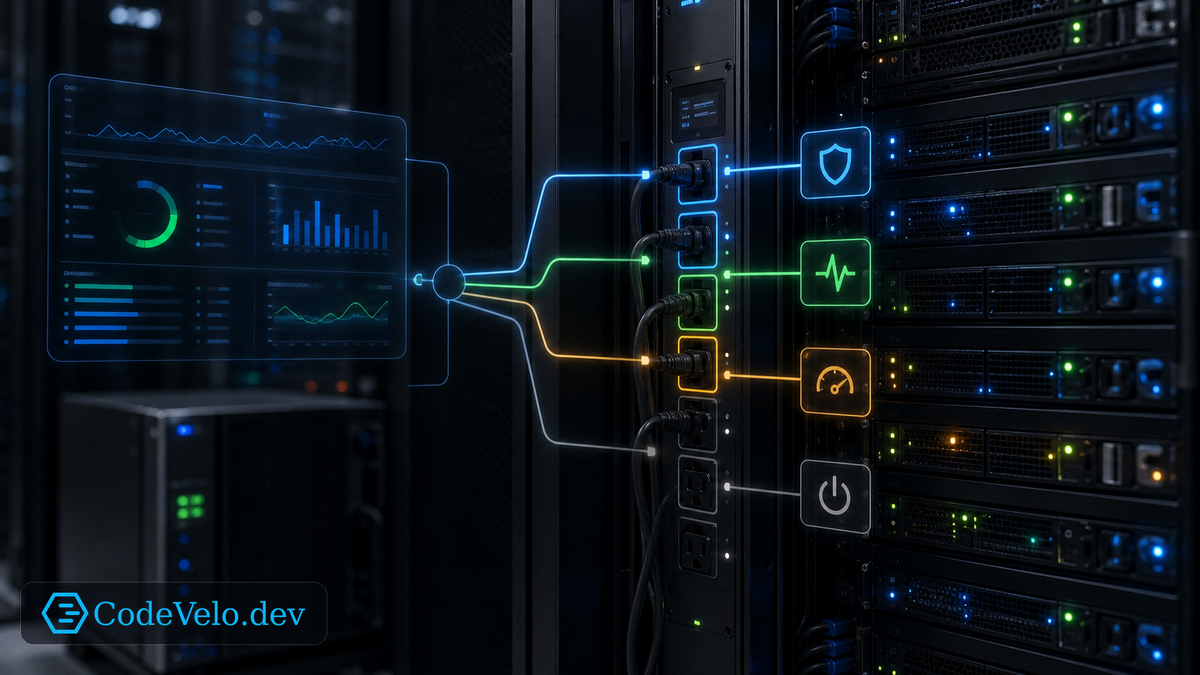
Remote power control is useful. Policy-based power control is better.
A smart PDU can tell you which outlets are drawing load, which rack is approaching capacity, and which devices can be cycled remotely. But the real value appears when power actions follow documented operational rules.
During an incident, nobody should be guessing which outlet matters.
Power Needs Priority
Not every device deserves the same runtime.
Critical paths should be identified before the UPS starts discharging: firewall, core switch, storage, controller, edge node, cameras, access control, wireless, and non-critical lab equipment all have different business value.
Policy-based power makes those priorities executable.
For example:
- Keep network core and WAN alive longest.
- Shed lab or guest equipment first.
- Never cycle storage without confirmation.
- Restore identity and routing before convenience services.
- Alert when redundant devices land on the same power side.
The policy turns a device list into an operating model.
Automation Should Respect State
Power automation must understand dependency order.
Cycling an access switch while the upstream firewall is unstable may hide the real problem. Restoring servers before storage is ready may create new failures. Restarting both redundant devices at once can turn resilience into outage.
Smart PDUs should feed monitoring and runbooks with outlet-level truth, but actions should still be gated by dependency checks.
Labeling Is Part Of The System
Outlet control is only safe when the labels are accurate.
Every smart PDU deployment needs clean naming, rack diagrams, device ownership, and change discipline. If an outlet label says "switch" but powers the firewall, remote control becomes dangerous.
The boring documentation is what makes the automation trustworthy.
Test Before The Emergency
Policy-based power should be tested during maintenance windows.
Confirm alerts, outlet mappings, load shedding, and restore order. Validate that monitoring can tell the difference between intentional power policy and unexpected failure. Review the results after each test.
Smart PDUs are not just remote hands. They are programmable power boundaries. Treat them with the same care as any other production control plane.