
Progressive Enhancement in the 2026 Stack
Zero-JS is not nostalgia. It is the baseline that lets modern apps keep working when JavaScript, hydration, or edge personalization fails.

Topic
Zero-JS is not nostalgia. It is the baseline that lets modern apps keep working when JavaScript, hydration, or edge personalization fails.

The CodeVelo Audit connects infrastructure, software delivery, and business operations. It helps teams find the bottlenecks that sit between network hardware and application code.

INP measures whether a page responds when users interact with it. Improving it means reducing main-thread work, long tasks, and avoidable JavaScript delays.

Islands architecture keeps static HTML as the baseline and hydrates only the interactive parts. That split can reduce JavaScript cost without giving up rich UI.

Image strategy affects LCP, bandwidth, and visual quality. AVIF, JPEG XL, responsive sizing, and quality automation all help reduce unnecessary page weight.

A flat network lets unrelated devices share too much trust. VLAN segmentation separates guests, cameras, workstations, servers, and build systems by risk.
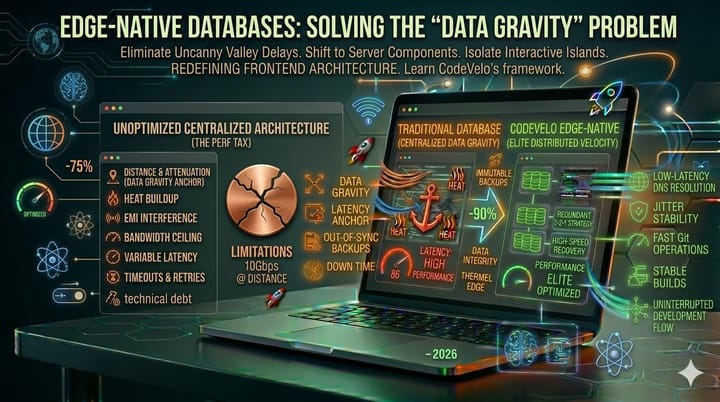
Edge-native databases reduce the distance between users and data, but they also introduce consistency and operational tradeoffs that teams need to design for.
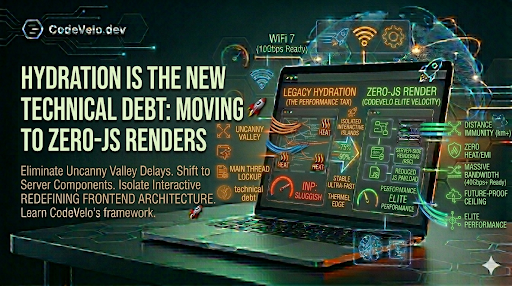
Hydration can turn fast HTML into a slow interaction path. Zero-JS rendering and server components help teams reserve client JavaScript for where it is needed.

Software delivery is affected by the physical network underneath it. DNS latency, jitter, switching, and cabling can all slow development and production workflows.