
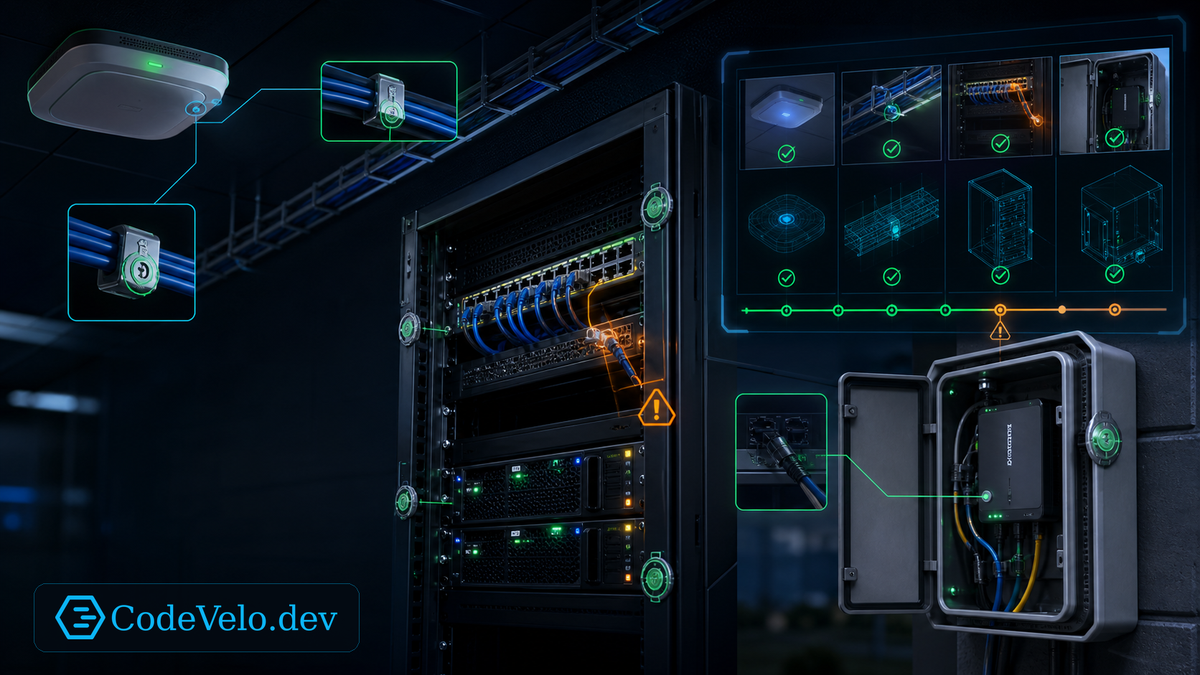
Physical controls cannot prevent every interaction with distributed infrastructure.
Racks may sit in shared rooms. Cameras, access points, sensors, and edge gateways may be reachable from public or semi-public spaces. Cabling passes through ceilings, closets, and handoff points that are difficult to monitor continuously.
Tamper evidence helps teams know when the physical state may have changed.
Start With A Baseline
Document the expected condition of doors, panels, patching, ports, fasteners, seals, cable routes, device placement, and serial numbers.
Use clear photographs and inventory records. Mark authorized spare ports and maintenance positions. A seal has little investigative value if nobody recorded how it was installed or what it protects.
The baseline turns visual differences into evidence.
Match Controls To The Environment
Use numbered seals, locking fasteners, enclosure switches, port blockers, protected conduits, cabinet sensors, or serialized tags where their cost and limitations fit the risk.
Do not rely on a sticker as proof that access was impossible. Many controls are designed to reveal disturbance, not prevent it. Layer them with access control, placement, monitoring, and inspection.
Avoid controls that create fire, electrical, cooling, or maintenance hazards.
Connect Physical And Digital Signals
Correlate enclosure events and inspections with link changes, device reboots, configuration changes, new MAC addresses, power events, and authentication activity.
An opened cabinet may be routine maintenance. The same event paired with an unknown device and configuration change deserves immediate attention.
Define The Response
Train staff not to discard or reset evidence before documenting it. Photograph the condition, preserve identifiers, restrict access, validate configuration, inspect connected paths, and escalate according to risk.
Replace controls after authorized work and update the record.
Run The Defense Test
Identify who is trusted near the equipment. Control and review access. Use enclosure and network boundaries to limit impact. Preserve physical and digital evidence. Keep known-good configurations and replacement paths ready.
Tamper evidence is valuable because it turns physical uncertainty into an actionable investigation.