
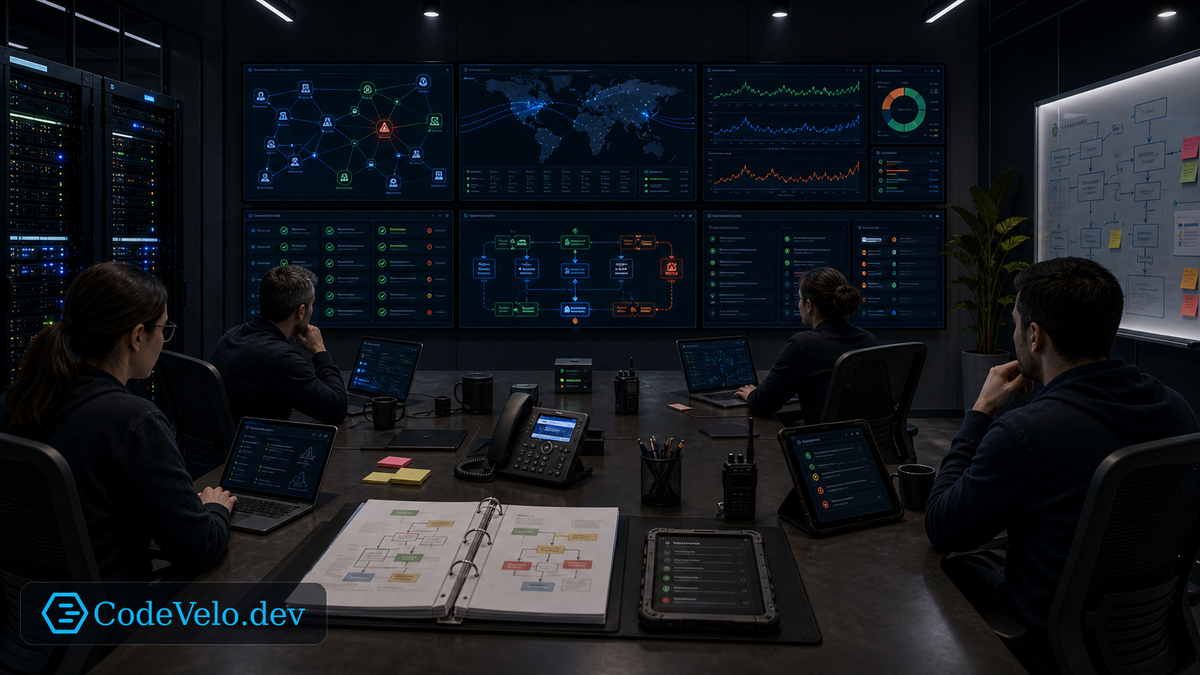
The phrase "war room" sounds urgent, but urgency is not a process.
During a physical or hybrid infrastructure incident, teams need a prepared operating space: topology maps, runbooks, access paths, contact lists, telemetry, spare hardware, and clear decision authority. The goal is not drama. The goal is execution.
Think run room, not war room.
Prepare The Room Before The Incident
The incident room can be physical, virtual, or both.
It should include:
- Current network and power diagrams.
- Vendor and utility contacts.
- Access procedures.
- Recovery runbooks.
- Spare parts and tools.
- Communication templates.
- Decision roles.
- Status dashboard links.
If people build the room during the outage, recovery starts late.
Separate Roles
Incidents slow down when everyone tries to do everything.
Define an incident lead, technical leads, communications owner, scribe, and approver for high-risk actions. In small teams, one person may hold multiple roles, but the responsibilities should still be explicit.
Clarity prevents parallel confusion.
Keep The Timeline
The incident record matters.
Track what changed, when, by whom, and with what result. Capture signals, decisions, rejected options, and recovery milestones. This helps the team stay aligned during the event and learn afterward.
A good timeline reduces repeated questions.
Make Recovery Executable
Run rooms should focus on action.
Which circuit can be isolated? Which switch can be bypassed? Which backup can be restored? Which site can carry load? Which feature can be disabled? Each answer should connect to a tested procedure.
Prepared operations feel calm because the next step is visible.