
Most network changes are simple until they are not.
A VLAN move, firewall rule, switch replacement, or ISP cutover can look obvious on paper and still fail because of an undocumented dependency. The problem is rarely one command. The problem is the real network being more complicated than the drawing.
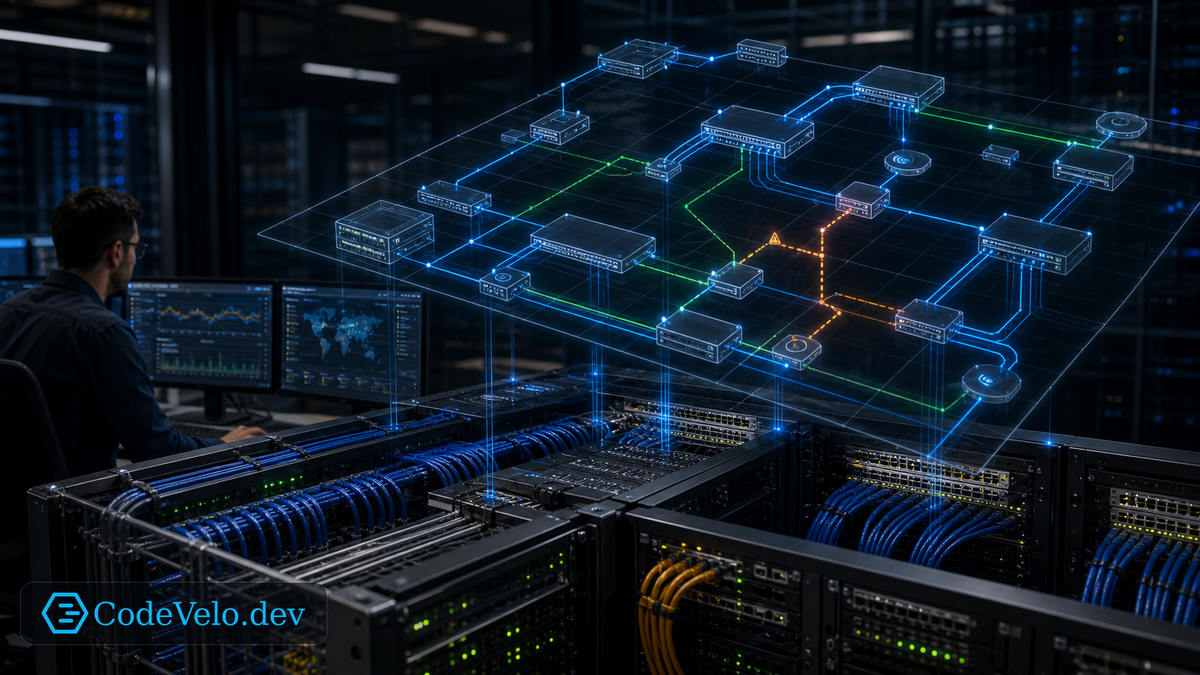
A network digital twin gives the team a place to rehearse.
Model The Parts That Matter
A useful twin does not need every screw in the rack.
Start with the elements that affect change risk:
- Switches, firewalls, routers, and wireless controllers.
- VLANs, subnets, routes, trunks, and ACLs.
- Uplinks, ISP paths, and physical conduits.
- Critical clients and services.
- Power dependencies for network devices.
The model should answer impact questions quickly: what breaks if this uplink changes, which devices depend on this VLAN, and where does traffic go during failover?
Rehearse The Change
Before the maintenance window, run the plan against the model.
Check route reachability, policy conflicts, duplicate addressing, missing trunk tags, and unsupported device assumptions. Compare intended state to current state. Generate a rollback plan while the team is calm.
The value is not perfect prediction. The value is finding weak assumptions before the clock starts.
Keep The Twin Fresh
A stale digital twin is worse than no twin because it creates false confidence.
Feed it from source-of-truth data, device configs, discovery scans, and post-change updates. Make drift visible. If the real network and model disagree, treat that as operational debt.
Automation should help maintain the map, but humans still need ownership.
Connect Physical And Logical Risk
Network twins should include physical paths.
Two logical links may look redundant while sharing a conduit, rack, switch stack, or power source. Change windows often fail at those hidden intersections. A good model connects routing to rooms, racks, panels, and cables.
When the team can simulate both packets and paths, change management becomes less theatrical and more engineering-driven.