
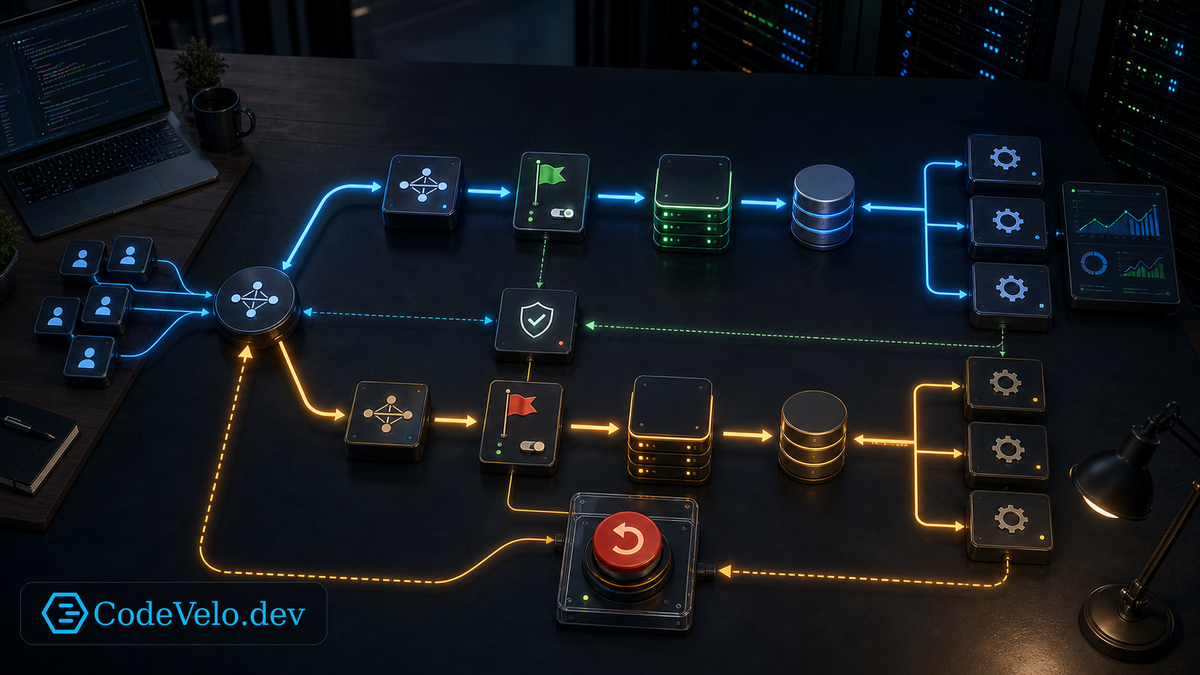
Most teams ask, "How do we ship this?"
Resilient teams also ask, "How do we undo this?"
Rollback-first architecture treats recovery as part of the design. The goal is not to expect failure. The goal is to make failure survivable when production teaches something staging missed.
Design Changes To Be Reversible
Some changes are easy to roll back. Others are not.
Static assets, feature flags, and stateless service deploys are usually straightforward. Database migrations, data backfills, external API changes, and user-visible workflows require more care.
Before release, identify the rollback class:
- Revert deploy.
- Disable flag.
- Shift traffic.
- Restore configuration.
- Run reverse migration.
- Manual repair required.
If the answer is unclear, the architecture is carrying hidden risk.
Separate Deploy From Release
Feature flags and progressive delivery make rollback easier because they separate code presence from user exposure.
Deploy the code. Enable it for a small group. Watch the signals. Expand gradually. If the feature misbehaves, reduce exposure without immediately rebuilding the world.
This is especially useful for AI features, integrations, and UI changes where correctness may depend on real user behavior.
Data Needs A Plan
Data changes are where rollback often fails.
Use expand-and-contract migrations, backward-compatible schema changes, dual writes only when justified, and explicit cleanup phases. Avoid one-way transformations during high-risk releases unless the business accepts the recovery cost.
The database should not be surprised by the deployment.
Practice The Recovery
Rollback plans should be tested.
Run rollback drills in staging. Measure how long recovery takes. Confirm dashboards show the right signals. Make sure on-call engineers can execute the path without finding tribal knowledge.
Rollback-first architecture is a sign of confidence, not fear. It means the team can move quickly because recovery is engineered.