
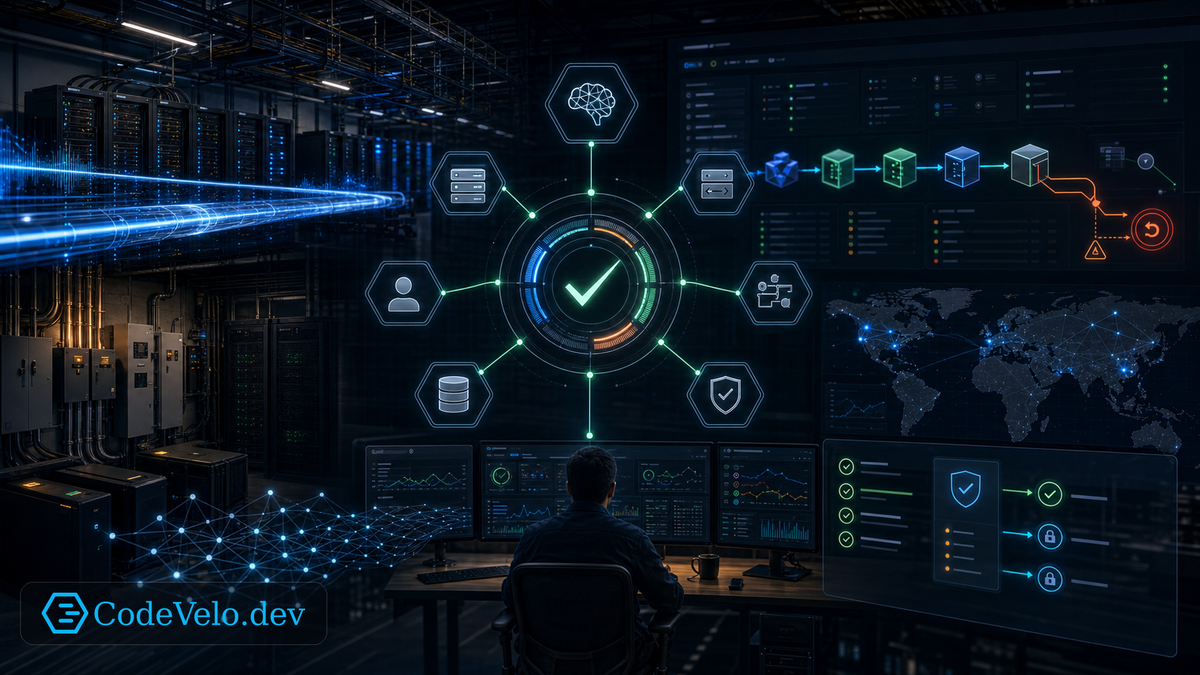
Automation is only useful when the team can trust it.
That trust does not come from demos. It comes from boundaries, evidence, observability, and recovery paths. Whether the system is an AI runbook, CI agent, smart PDU, patch workflow, or deployment pipeline, the same question applies: what happens when it is wrong?
This is the July trust audit.
1. Define Authority
Every automation path should have a clear permission model.
What can it read? What can it suggest? What can it change? Which actions require approval? Which actions are never automated?
Authority should be narrow, documented, and enforced outside the model or script making the recommendation.
2. Preserve Evidence
Trusted automation shows its work.
Keep records of inputs, decisions, tool calls, policy checks, approvals, and outcomes. For AI systems, log retrieved sources and action requests. For infrastructure systems, log device state and operator approvals. For deployments, log release evidence and rollback decisions.
Evidence is what makes review possible.
3. Model The Blast Radius
Automation should know what it can break.
Map dependencies across physical and digital layers: power, network, identity, data, services, users, and recovery order. A small command can have a large blast radius if it touches the wrong shared dependency.
If the system cannot estimate impact, it should not act alone.
4. Make Rollback Real
Every automated change needs a recovery story.
That may be a configuration backup, feature flag, traffic shift, restore point, firmware rollback, or manual break-glass procedure. If rollback is slow or impossible, the approval process should reflect that risk.
Speed without recovery is debt.
5. Review The Exceptions
The most valuable automation data often appears in the exceptions: skipped patches, failed health checks, denied tool calls, repeated flaky builds, and manual overrides.
Review those signals regularly. They show where trust is weak.
Automation should reduce operational burden without hiding operational reality. The trustworthy system is the one that can explain what it did, why it did it, and how to stop it.