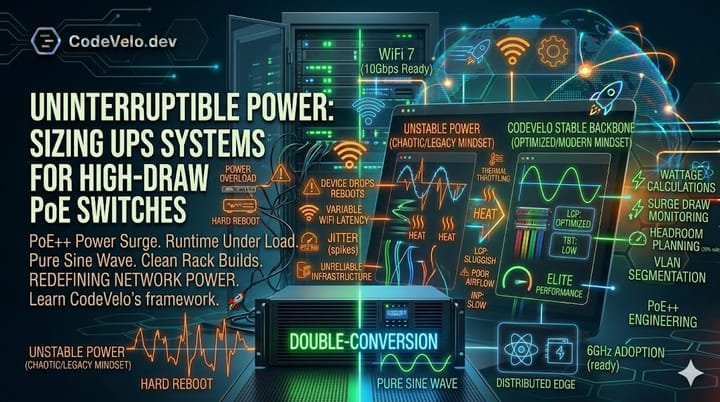
Uninterruptible Power: Sizing UPS Systems for High-Draw PoE Switches
UPS sizing for PoE switches requires more than counting outlets. Power draw, surge behavior, runtime targets, and waveform quality all affect reliability.

Topic
Infrastructure field notes for the physical and operational systems that keep businesses online: racks, cabling, power, Wi-Fi, fiber, backups, monitoring, and recovery planning.
UPS sizing for PoE switches requires more than counting outlets. Power draw, surge behavior, runtime targets, and waveform quality all affect reliability.

A flat network lets unrelated devices share too much trust. VLAN segmentation separates guests, cameras, workstations, servers, and build systems by risk.
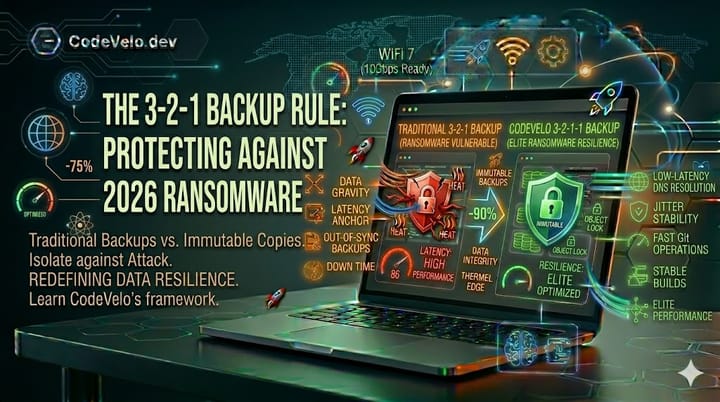
The 3-2-1-1 backup rule adds immutable recovery to traditional backup planning. It helps teams survive ransomware that targets backup systems first.

Wi-Fi 7 improves more than peak throughput. Multi-link operation, spectrum planning, and wired backhaul determine whether the upgrade improves business reliability.
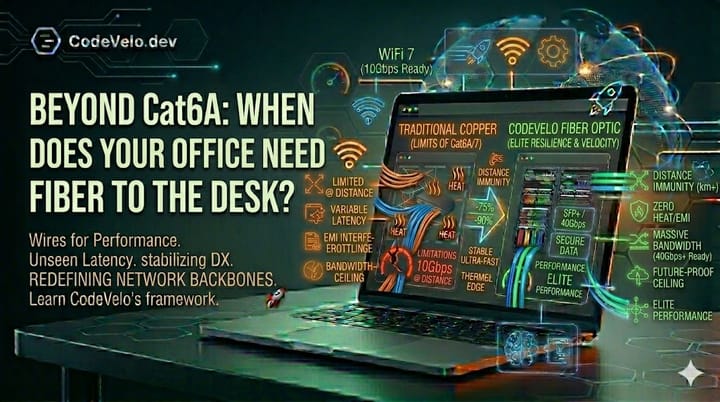
Fiber-to-the-desk starts to matter when distance, bandwidth, EMI, or heat make copper the wrong fit. The decision should follow workload and facility constraints.

Unexpected device drops often start with PoE budget mistakes. Calculate draw, startup behavior, and headroom before blaming cameras, access points, or switches.
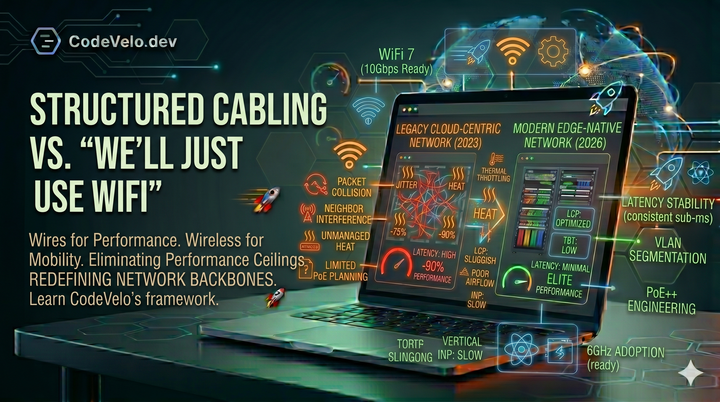
Wi-Fi is useful for mobility, but structured cabling still carries the dependable workloads. Good network design uses both for the jobs they handle best.
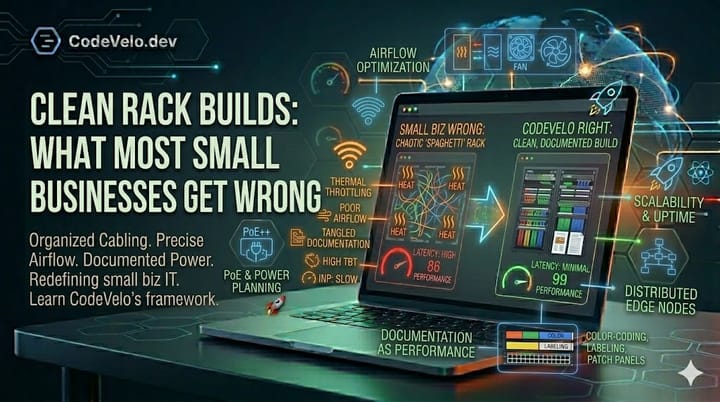
A clean rack is easier to cool, troubleshoot, document, and recover. Cable management and labeling are operational controls, not cosmetic details.

Commercial Wi-Fi depends on placement, spectrum planning, backhaul, and segmentation. Signal strength alone does not prove the network can support real workloads.