
Smart PDUs and Policy-Based Power
Smart PDUs become more valuable when power control is tied to policy, priority, and recovery order instead of ad hoc remote clicks.

Topic
Infrastructure field notes for the physical and operational systems that keep businesses online: racks, cabling, power, Wi-Fi, fiber, backups, monitoring, and recovery planning.
Smart PDUs become more valuable when power control is tied to policy, priority, and recovery order instead of ad hoc remote clicks.

AI runbooks can make small infrastructure teams faster, but only when they are grounded in real topology, verified procedures, and clear escalation rules.

Active-active office hubs require more than duplicate equipment. Fiber paths, identity, storage, and network design all have to agree on failover.
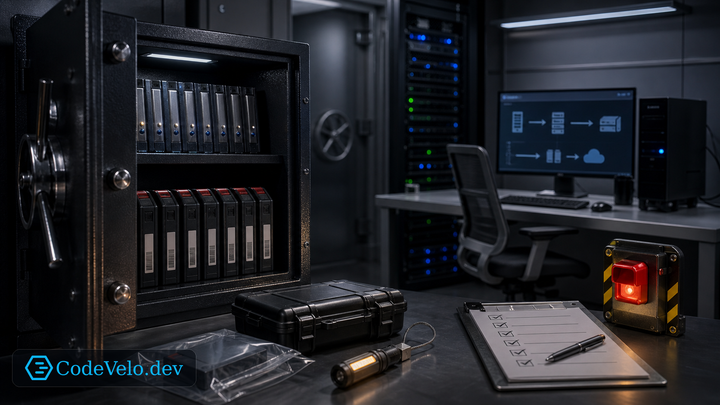
Immutable backups are only useful if the team can recover from them under pressure. The break-glass protocol turns cold storage into an executable plan.
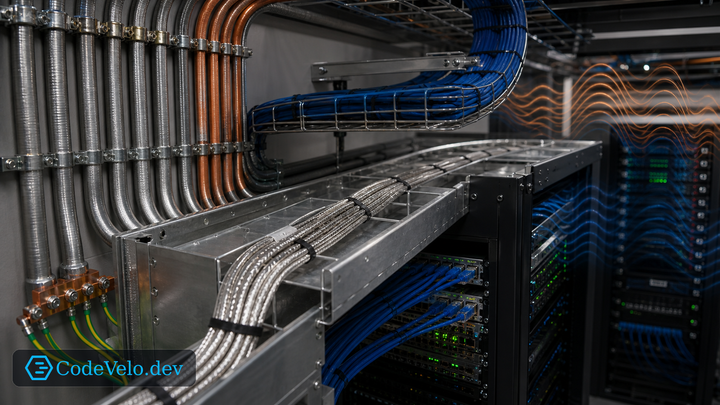
High-density 10Gbps cabling can turn small physical mistakes into real performance problems. Shielding, routing, and grounding all matter.

Fans, bearings, and power supplies often sound unhealthy before they fail. Acoustic monitoring turns the rack into another source of operational telemetry.

Latency work eventually runs into physics. Hollow-core fiber changes the conversation by moving the signal through air instead of solid glass.

A UPS protects you from seconds of power instability. Dual-grid entry protects you from losing the building. Here is how mission-critical teams design diverse power paths before the battery ever has to work.

Small server closets fail quietly when heat has nowhere to go. Airflow, blanking, equipment placement, and active exhaust can extend reliability without a full HVAC rebuild.